
 TR
TR  DE
DE 
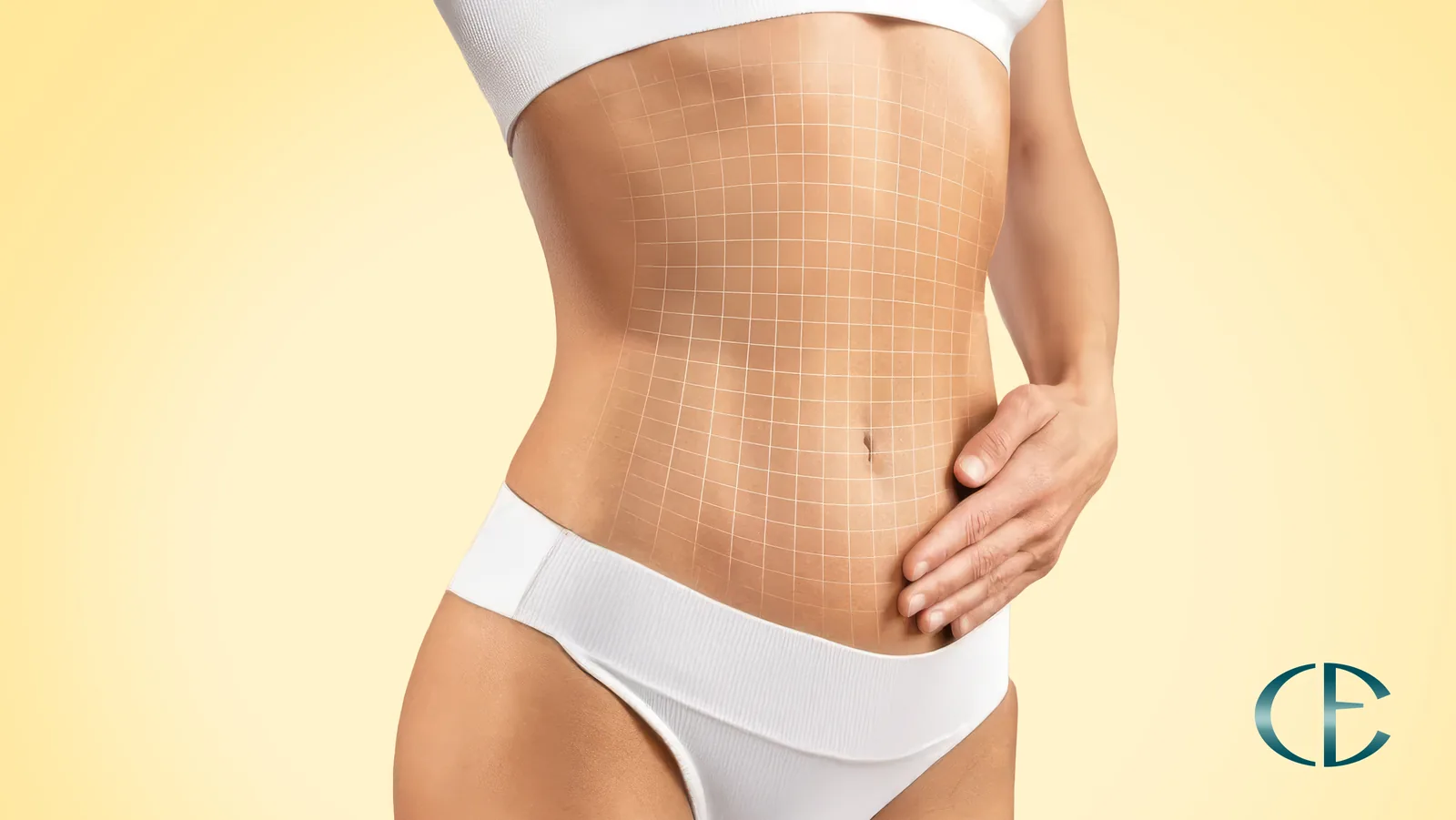
Weight loss does not always mean a flat stomach. After pregnancy, major weight changes or simply with time, the skin of the abdomen can stretch beyond the point where it can recover on its own. And underneath the skin, the abdominal muscles can separate from each other — a condition that no amount of exercise will correct.
Abdominoplasty removes excess skin, tightens the abdominal wall and, when combined with liposuction, reshapes the contours of the waist and flanks.
Prof. Dr. Cengiz Eser is a plastic, reconstructive and aesthetic surgeon based in Adana, Turkey, with more than 20 years of academic and surgical experience.
What Is Abdominoplasty?
Abdominoplasty — also called a tummy tuck — is surgery to the abdominal wall. It removes loose and excess skin from the lower abdomen and, where the abdominal muscles have separated, repairs them in the midline. This is not a weight loss procedure.
How Is It Performed?
Full abdominoplasty
A horizontal incision is placed low across the abdomen, planned to sit below a bikini or underwear line. The muscles are assessed for separation. Where diastasis recti is present, they are brought back together and stitched in the midline. Excess skin is removed and the navel is repositioned. Performed under general anaesthesia, approximately 2 to 3 hours. An overnight hospital stay is standard.
Mini abdominoplasty
Where excess skin is confined to below the navel. The navel is not moved. This is a different operation for a different problem — not a smaller version of the full procedure.
Combined with liposuction
Frequently combined in the same session for more comprehensive contouring.
Diastasis Recti — The Part That Exercise Cannot Fix
During pregnancy, the two vertical abdominal muscles are pushed apart at the midline. After delivery, they may not return to their original position. The result is a belly that still protrudes despite weight loss.
Standard abdominal exercises cannot bring separated muscles together — certain exercises can increase the separation. The repair is surgical: the muscles are brought back together and stitched in the midline.
Who Is a Suitable Candidate?
- Loose or excess skin on the lower abdomen after pregnancy or weight loss
- Muscle separation (diastasis recti) causing abdominal protrusion
- Weight stable for several months
- Family complete
- Good general health with realistic expectations
- Acceptance that the horizontal scar is permanent
Not recommended for patients planning further pregnancies.
Before Surgery
- Assessment of abdominal skin and muscle wall
- Review of weight history and confirmation of stability
- Routine blood tests and anaesthesia assessment
- Stopping blood thinning medication under medical supervision
- Stopping smoking at least 3 weeks before surgery
- Organising help at home for the first 2 to 3 weeks
Recovery
First 2 days: Hospital observation. Movement encouraged from day one.
First week: Compression garment worn continuously. No lifting.
Weeks 2–3: Stitches removed. Return to desk work.
Weeks 4–6: Light walking resumes.
Weeks 6–8: Heavier activity resumes with surgeon's approval.
Months 3–6: Swelling resolves, contours become clear.
Months 6–18: Scar matures and fades.
Coming to Turkey for Surgery
International patients are looked after by an English-speaking clinical team from the first consultation until follow-up after returning home. Airport pick-up, accommodation and transfers are organised by the clinic coordinator.
Length of stay: Plan for 10 to 12 days.
Why Adana?
Two decisions determine the result: whether the muscles need repair, and how much skin can safely be removed. Abdominoplasty is performed here with or without muscle repair, and combined with liposuction where appropriate. Each plan is made by assessing the skin, the muscle wall and the patient's goals together.
Frequently Asked Questions
Will there be a scar?
How long does the scar end up being?
I have been pregnant. Do I also have diastasis recti?
Can exercise fix diastasis recti?
Can this be done if I am planning another pregnancy?
Will the scar be visible in a swimsuit?
Can liposuction be done at the same time?
Is it a weight loss procedure?
How long should I stay in Turkey?
When can I fly after surgery?
To see how the process works step by step: Patient Journey