
 TR
TR  DE
DE 
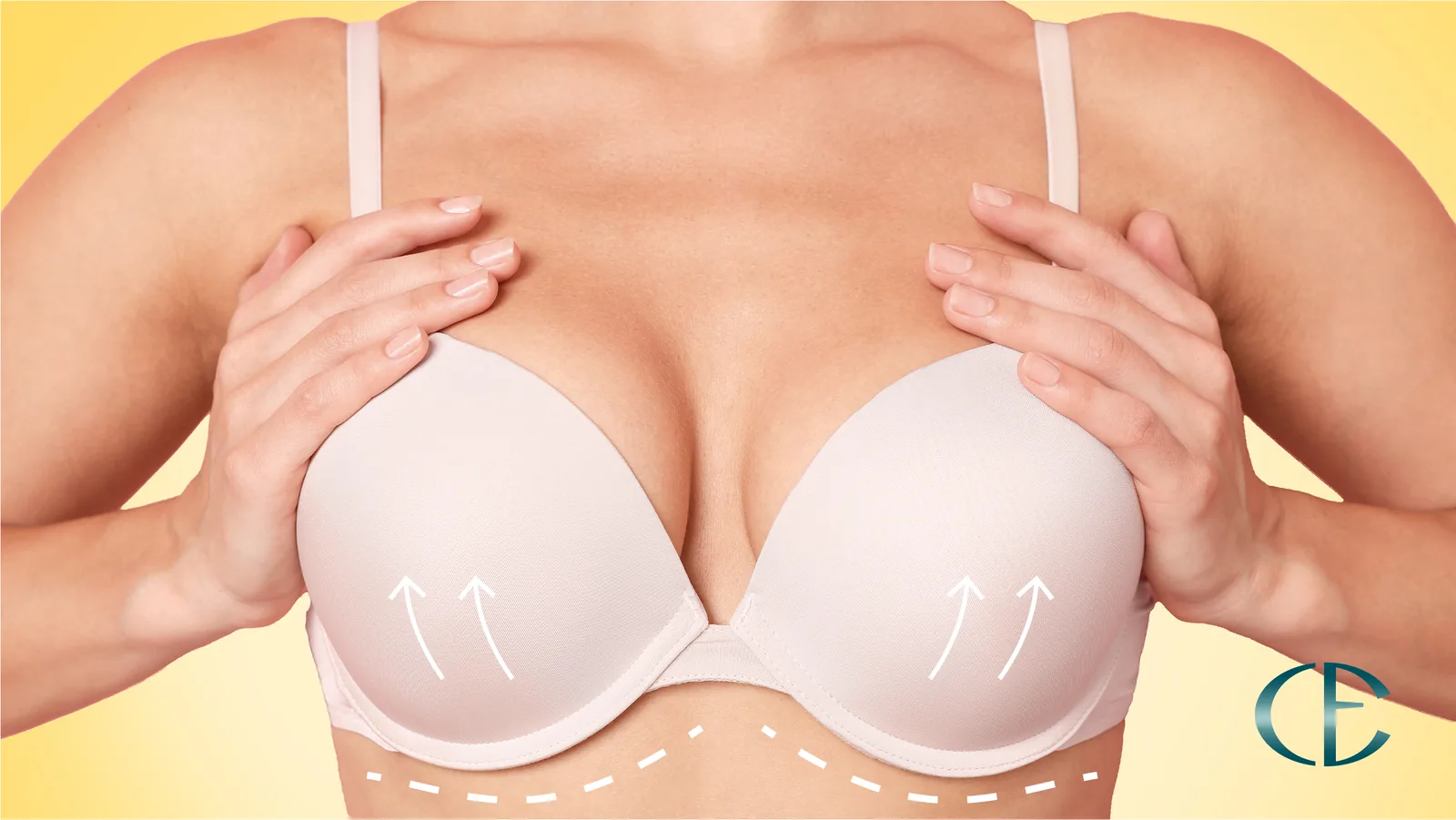
After pregnancy and breastfeeding, the breast often does not return to what it was. The volume that expanded during feeding reduces when milk production ends, and what remains is stretched skin with less tissue inside it. The result is a breast that has lost its shape and position.
A breast lift restores the position and shape of the breast without adding or removing volume.
Prof. Dr. Cengiz Eser is a plastic, reconstructive and aesthetic surgeon based in Adana, Turkey, with more than 20 years of academic and surgical experience.
What Is a Breast Lift?
A breast lift — mastopexy — raises the breast on the chest wall, repositions the nipple to a higher point, removes excess skin and reshapes the breast mound. It is not an augmentation — volume is not added. In patients who want to restore volume at the same time, a lift can be combined with an implant in the same session.
How Much Sagging Is Too Much?
Grade 1 (mild): Nipple at or just below the breast crease. Breast has lost projection but nipple has not dropped far.
Grade 2 (moderate): Nipple has dropped below the crease and points slightly downward.
Grade 3 (severe): Nipple sits well below the crease and points downward. Breast has lost its rounded shape.
This grading determines the technique and the length of the scar.
How Is It Performed?
Periareolar (doughnut) lift: For mild sagging only. Scar sits at the border of the areola.
Vertical (lollipop) lift: For moderate sagging. Most commonly used technique.
Inverted T (anchor) lift: For significant sagging. Longer scar but more correction.
Can a Lift and Implant Be Done Together?
Yes, and this is a common combination — particularly in patients who have lost volume after breastfeeding. One anaesthetic, one recovery, proportions planned as a whole. The alternative is to do the lift first and add the implant later. The two-stage plan is discussed at the consultation and the choice is made according to your anatomy.
Who Is Suitable?
- Breasts that have lost shape and position after pregnancy and breastfeeding
- Sagging caused by age or weight loss
- Nipple sitting at or below the breast crease
- Acceptable breast volume but changed position
- Patients who also want to restore volume — lift with implant combination
- Weight stable and general health suitable
- Aged 18 and over, breast development complete
If you are planning further pregnancies, delaying surgery is worth considering.
Before Surgery
- Assessment of degree of sagging and nipple position
- Measurement of breast volume and skin thickness
- Discussion of whether an implant will be combined
- Breast ultrasound, and mammography according to age
- Routine blood tests and anaesthesia assessment
- Stopping blood thinning medication under medical supervision
- Stopping smoking at least 2 weeks before surgery
Recovery
Day of surgery: Usually day-case or one overnight stay.
First week: Supportive bra worn continuously. Arms not raised above shoulder height.
Weeks 2–3: Stitches removed. Return to desk work.
Weeks 4–6: Light exercise resumes.
Weeks 6–8: Upper body exercise begins with surgeon's approval.
Months 3–6: Breast shape settles, swelling fully resolves.
Months 6–18: Scars mature and fade.
Coming to Turkey for Surgery
International patients are looked after by an English-speaking clinical team from the first consultation until follow-up after returning home. Airport pick-up, accommodation and transfers are organised by the clinic coordinator.
Length of stay: Plan for 7 to 10 days.
Why Adana?
In a breast lift the technique must match the degree of sagging. Using a periareolar approach where the sagging is moderate produces a flat, wide result. Using a full anchor incision where a vertical lift would suffice means unnecessary scarring. Breast lift surgery is performed here, with and without implants, using the technique selected for each patient's degree of sagging, skin quality and goals.
Frequently Asked Questions
Will there be scars?
Will my breasts sag again?
Can a lift and implants be done together?
Can this be done if I am planning another pregnancy?
Will sensation in the nipple change?
How is a lift different from a reduction?
Is a lift suitable if I have implants already?
How long should I stay in Turkey?
When can I fly after surgery?
To see how the process works step by step: Patient Journey